OPC UA Client Introduction
OPC UA Client
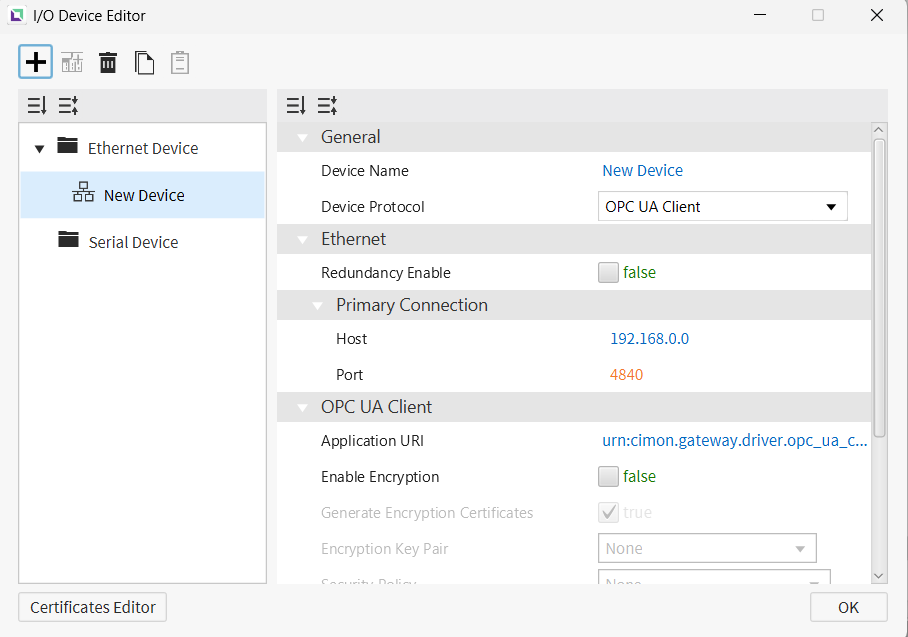
Canvas supports OPC UA Client as a way to connect to other devices that support this protocol. Users can configure the connection's Timeout, Retry Count, and String Encoding, along with the Host and Port used to reach the device. The Ethernet settings also allow users to enable Redundancy for the connection. Users can enable encryption and manage specific Security Policies and authentication methods for their OPC UA Client.
Format
Tags on the OPC UA Server are assigned a unique NodeId for identification, which is what is used in a tag's address. The OPC UA NodeId is comprised of three components: namespaceIndex, identifierType, and identifier. The components can be serialized into a string using the following format:
ns={namespaceIndex};{identifierTypeFlag}={identifier}
The nameSpaceIndex represents the namespace which the Node belongs to. This namespace will have a qualified string name, but it will be registered on the OPC UA Server and assigned an index, which is what it is referred by.
The identifierType denotes the data type in which the identifier is represented. There are four types: NUMERIC, STRING, GUID, and OPAQUE.
identifierType | identifierTypeFlag | identifier Data Type |
|---|---|---|
| NUMERIC | i | Unsigned Integer |
| STRING | s | String |
| GUID | g | Guid |
| OPAQUE | b | ByteString |